

Six villages worth the drive
Five Luberon villages carry the official "Plus Beaux Villages de France" label. Five more do not, and are worth just as much of your time. Ten villages within reach of Lourmarin, with what to see and when to go.
- Home
- The Luberon
- Six villages worth the drive
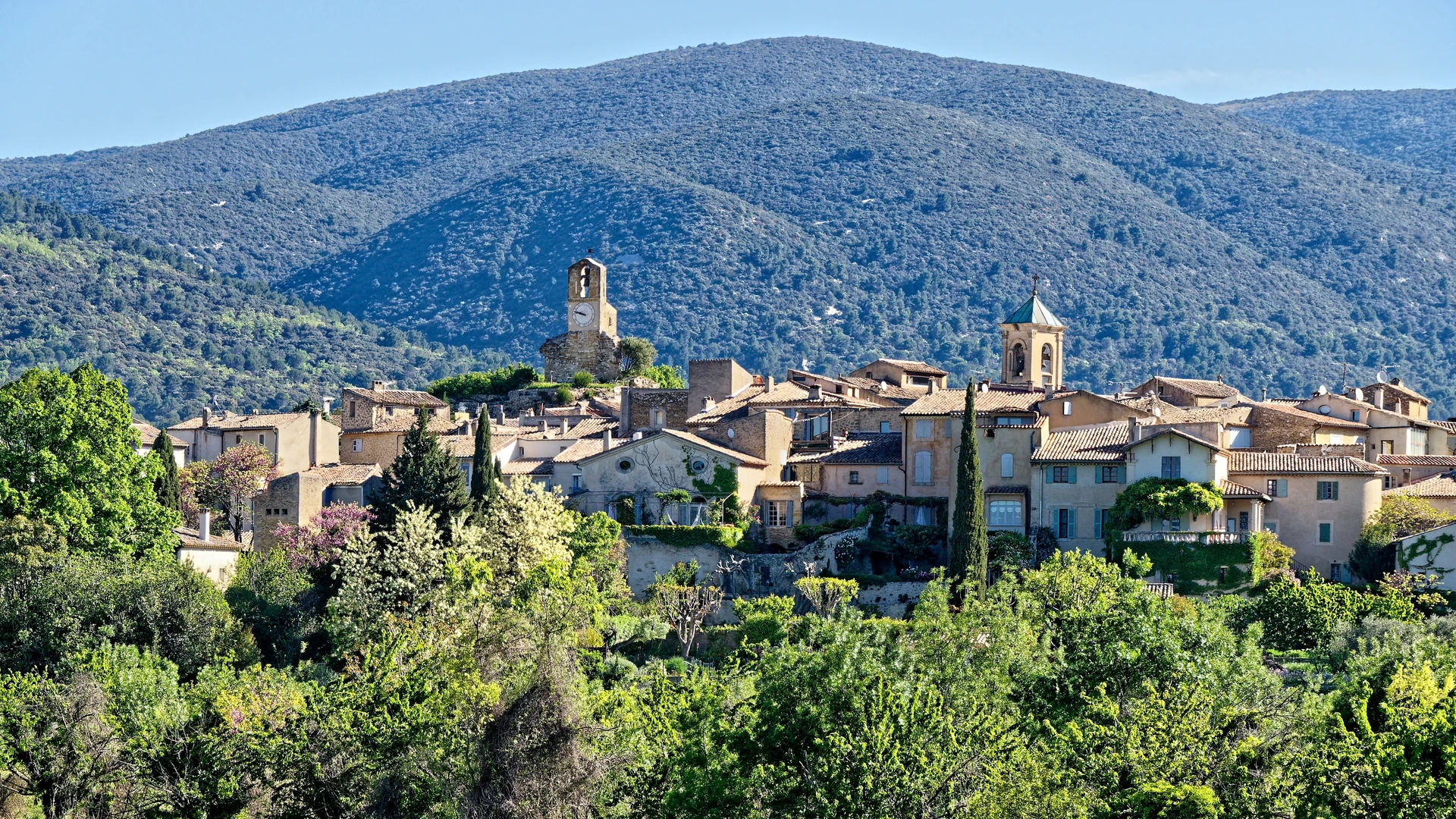
The Luberon has a handful of hilltop villages the whole world photographs, and a few others, just as beautiful, where nobody stops. Here are ten worth your day, in the order you reach them from Lourmarin.
The label, and what it leaves out
Five Luberon villages carry the official "Plus Beaux Villages de France" label. The Vaucluse department has seven in total; the other two, Séguret and Venasque, lie further north, outside the massif.
The five labelled villages of the Luberon
- Lourmarin
- Ansouis
- Gordes
- Ménerbes
- Roussillon
Bonnieux, Lacoste, Oppède-le-Vieux, Goult, Cucuron and Vaugines do not have it. They are still six of the finest places to end a day in the massif, and they hold one advantage over the other five: you can still park.
A word of geography, because it governs everything else. A single road crosses the massif, the D943, which climbs the Combe de Lourmarin — a gorge cut into the limestone by the Aigues Brun, running between vertical cliffs for some fifteen kilometres up to Apt. From Lourmarin you sit at the southern mouth of that passage. The northern villages are twenty minutes away through the gorge; the southern ones share your valley.
North of the gorge: the hilltop villages of the Petit Luberon
Bonnieux
The first village past the gorge, and the steepest. Bonnieux climbs its spur in several tiers joined by stairways; the upper church, part Romanesque and part Gothic, dates from the 12th and 13th centuries and has to be earned. From the cedar-planted terrace beside it you see the whole Calavon valley, the villages opposite and, on a clear day, Mont Ventoux. There is also a bakery museum housed in an old communal oven. Market on Friday morning — the same day as Lourmarin, which forces a choice.
Above the village, a forest of Atlas cedars covers the ridge of the Petit Luberon. It grew from a plantation begun in 1861 and now spreads over some 250 hectares across Bonnieux, Lacoste and Ménerbes. It is the coolest place in the massif in August, and the best end of day in the Luberon: in summer the light comes sideways through the trunks.
Lacoste
A few kilometres on, a village of narrow cobbled lanes under the ruined castle of the Marquis de Sade. Pierre Cardin bought it in 2001 and had the site made safe; the quarries beside it host a theatre, dance and music festival every July. The rest of the year Lacoste is close to silent. Walk up to the castle in late afternoon: the village faces Bonnieux, and the two look at each other across the valley.
Ménerbes
Labelled. A long inhabited ridge on a rocky spur, vines and scrubland on every side. Ménerbes owes much of its fame to Peter Mayle, whose A Year in Provence (1989) introduced the Luberon to the English-speaking world. You can visit the Maison de la Truffe et du Vin, in a 17th-century mansion on the place de l'Horloge, and, just before the village on the Robion road, a corkscrew museum set inside a wine estate. The house where Dora Maar lived is now an artists' residence and is not open to visitors. Market on Thursday morning.
Oppède-le-Vieux
The strangest of the ten. Villagers left the old settlement in the early 20th century for the plain below; what remains is a set of lanes handed back to the stone, houses bought one by one by artists, and at the top a collegiate church, Notre-Dame d'Alydon, whose oldest parts go back to the 12th century. You leave the car in a paid car park below: five minutes to the gates, then a steady climb from the place de la Croix. Bring proper shoes and avoid the midday sun. Around five in the afternoon it is a different place.
The Monts de Vaucluse: ochre and dry stone
Goult
Not labelled, barely visited, and that is the point. Goult takes an hour: you walk up to the Moulin de Jérusalem, a windmill of 1750 restored by the village, with a view over the whole valley. Below it, the conservatory of cultivation terraces shows five hectares of restored dry-stone terracing planted with olive and almond trees — how these slopes were farmed before the tractor. A good village for lunch without booking three weeks ahead.
Roussillon
Labelled, and the only village in the massif whose façades run from straw yellow to blood red. It sits on an ochre deposit worked until the middle of the 20th century. The Sentier des Ocres, laid out through the old quarries at the edge of the village, offers two loops, one of about thirty minutes and one of about fifty. There is an entrance fee, opening hours shift considerably from month to month and the site closes in January for maintenance: check before you set off, and note that heavy rain can close it too. Come in late afternoon, when low light saturates the ochres — and leave the pale shoes behind, the red dust does not wash out. The ochre ecomuseum, in the former Mathieu factory built in 1921, explains the rest. Market on Thursday morning.
Gordes
Labelled, and by far the most photographed. The village stacks its grey stone houses in a half-circle above a cliff; the famous view is taken from a viewpoint on the road up from Cavaillon, just before the entrance. A kilometre and a half to the west, the Village des Bories gathers some twenty dry-stone huts, listed as a historic monument since 1977 and turned into an open-air museum. Further on, the Abbey of Sénanque, founded in the 12th century, still houses a Cistercian community: visits are supervised and booking is required. The lavender field in front of the apse flowers for part of the summer only — which is also when access is hardest. Market on Tuesday morning.
South, in the Lourmarin valley
These three ask nothing of you but a short drive: they sit minutes from Lourmarin on the same road, and fit into half a day.
Vaugines
Lourmarin's immediate neighbour, and the quietest of the ten. Its Romanesque church, Saint-Barthélemy, from the 12th century, stands apart from the village under old plane trees: Claude Berri filmed scenes of Jean de Florette and Manon des Sources here, after Pagnol. Almost nothing has changed since. On the square, a mossy fountain and two café terraces. There is nothing to do but sit down, which is the point.
Cucuron
Not labelled, yet one of the finest squares in the Luberon: a large rectangular basin rimmed with enormous plane trees, right in the middle of the village. Ridley Scott filmed scenes of A Good Year here, from Peter Mayle's novel. The Tuesday morning market runs around the basin, under the trees. Come in the morning for the market, or in the evening for the cool: the water and the planes drop the temperature by several degrees.
Ansouis
Labelled. A village of calades — steep cobbled lanes — climbing towards a castle founded in the 10th century on a rocky outcrop, one of the oldest fortresses in Provence, reworked in the Renaissance. It is privately owned: the family guide the visits themselves, by reservation, a few afternoons a week and only for part of the year. Check the days before you drive up, and bring cash. The church of Saint-Martin and the viewpoint on the ramparts are freely open.
Those three link up easily by bike. We rent electric bikes on site, €25 for a half day and €39 for a full day, by reservation — routes are set out in our guide to the Luberon by e-bike.
A one-day itinerary
This loop leaves Lourmarin, climbs the gorge, rounds the northern villages and comes back down in the evening. It is dense: treat it as a frame and cut a third of it rather than rush.
- 8am — Leave Lourmarin on the D943, twenty minutes of gorge between the cliffs.
- 8.30am — Gordes: the viewpoint on the Cavaillon road, then the village. The only hour you will park without circling.
- 9.30am — Sénanque Abbey, if you have booked. Otherwise the Village des Bories.
- 11am — Goult, the Moulin de Jérusalem and the cultivation terraces.
- 12.30pm — Lunch in Goult or Ménerbes.
- 3pm — Ménerbes, the ridge and the place de l'Horloge, in the shade of the lanes.
- 4.30pm — Oppède-le-Vieux. The climb is steep; the late afternoon suits it.
- 6pm — Roussillon, when low light gives the ochres their real colour. Check the closing time for the season.
- 7.30pm — Bonnieux, the cedar forest at sunset, then back down the gorge.
Keep the next morning for the southern valley: Cucuron's Tuesday market, Vaugines and its church, Ansouis in late afternoon. Three villages, half a day, no mountain road. And if you are staying longer, our guide to Lourmarin covers what there is to see in the village itself — the castle and Albert Camus' grave deserve a morning of their own.
The advice that changes everything
Three villages a day. Not six. The roads are narrow, the car parks small, the villages vertical: every visit ends in a climb. A six-village programme produces six car parks and no memories.
The hour matters more than the season
Gordes, Roussillon and Ménerbes are empty between 8 and 10 in the morning and full from 11 to 5. In July and August, Gordes at midday is a traffic jam with a view. Parking there is charged during the day and central spaces are scarce, more so on Tuesday morning, market day. Arrive early, or give up and come back at six: the villages are then almost as quiet as in November.
Do not stack two markets on the same day
They overlap: Gordes and Cucuron on Tuesday morning, Ménerbes and Roussillon on Thursday morning, Bonnieux and Lourmarin on Friday morning. The Lourmarin market is one of the largest around and deserves the whole morning. Days and seasonal dates do change: one call to the local tourist office saves a wasted trip.
Cash and closed shoes
Several small sites — private castles, village museums — do not take cards and work by reservation. And calades, those steep cobbled lanes, are slippery: beach sandals do not survive them.
Sleep on the right side of the massif
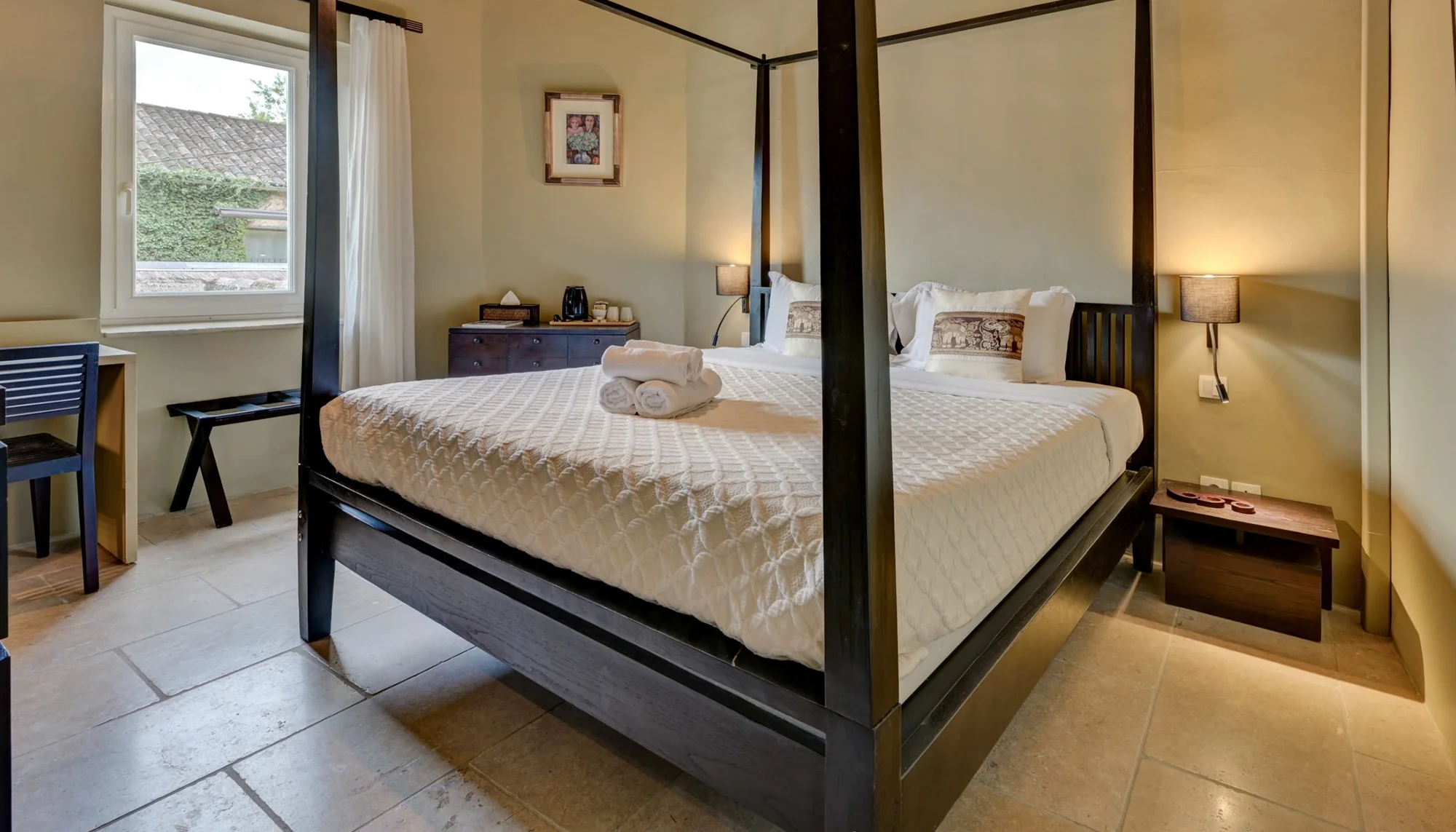
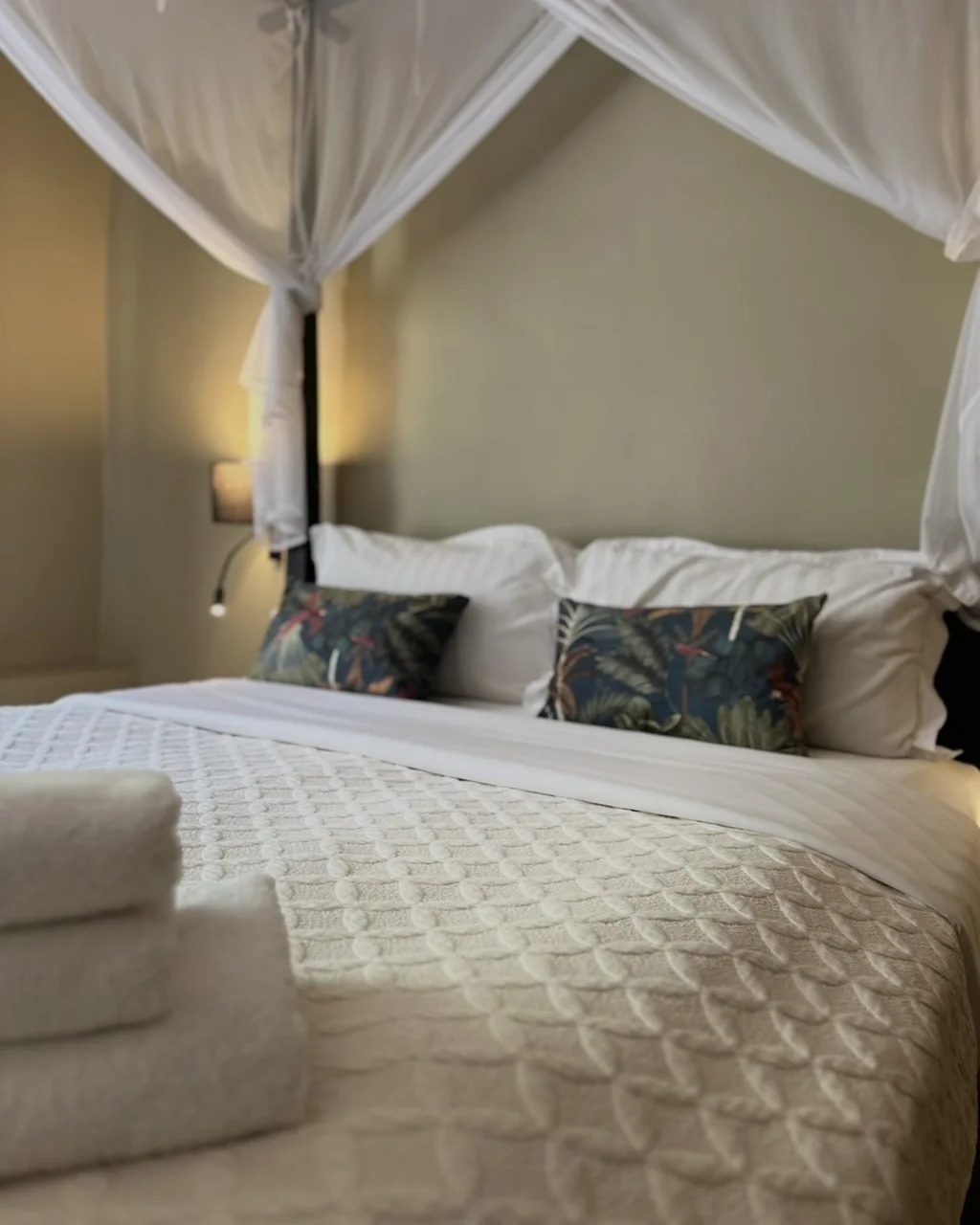
Staying south, in Lourmarin, puts the northern villages twenty minutes away through the gorge while keeping Cucuron, Vaugines and Ansouis within cycling range. That is our own case here, on the bank of the Aigues Brun at the edge of the village on the route d'Apt: ten rooms, a natural pool under century-old trees to cool off on your return, and the restaurant open 7 days a week, lunch and dinner, when the hilltop villages have closed their kitchens. To choose your area before booking, read where to stay in Lourmarin, or browse our rooms.